
Colleges Need a New Value Prop
BUSINESS


Colleges need to rethink their value proposition and start diversifying their product offerings in the United States. The American economy and the resilience of future generations depends on it.
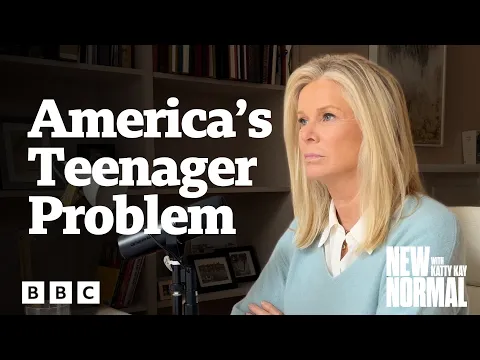
This past weekend an interesting interview from Katty Kay of the BBC (see video above) made the rounds amongst our group. It reflected on a topic that most of us have known about and, a few of us, have been talking about since the COVID era. The pipeline of children, we can call it the TAM (Total Addressable Market), in the United States is shrinking and has been doing so for the past 20 years.
We, here at Internal Audit Next, have already reflected on this in our Staffing for the Future piece and The Last Expert Standing piece.
Hats off to her guest Nathan Gawe, Professor of Economics at Carleton College, for towing the party line of the value of college. But our opinion is that she should have talked to an outsider about this. Perhaps Professor Galloway over at Prof G Media, who was ringing this bell several years ago. The problem isn’t simply the reduction of potential customers to buy the product college is selling. The problem is that the product itself is no longer relevant to the very people it needs to provide the most value: Young people entering the job market.
First, let’s tackle the demographics.
Source: MacroTrends
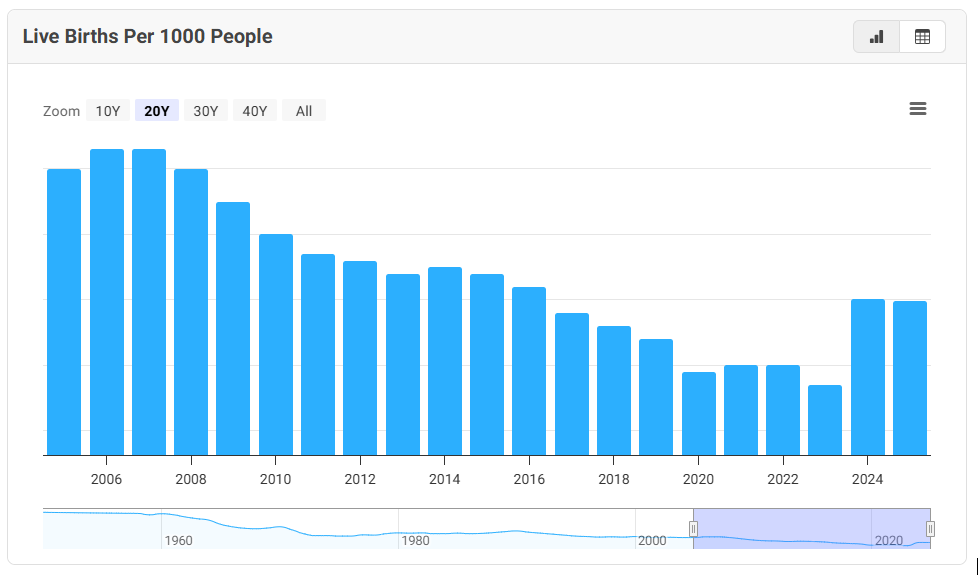
The chart above shows the birth rate for the past 20 years. Until 2024, it shows a declining birth rate in the United States. That means the problems for most colleges will only get steadily worse for, at least, the next 20 years. It is what Professor Galloway was talking about all the way back in April of 2020 while we were in the grips of COVID. His focus has been mostly on the class/income divide that drives college attendance and he has also focused on how the most elite schools are reaping the most rewards. In a No Mercy/No Malice piece and a Medium article in 2023 he pointed out that he was mostly right about all this with a pretty compelling case. Again, focusing on the class/income divide that our dysfunctional higher education system is driving.
What was remarkable to us about Katty Kay’s interview was the points not made by her guest:
First, he failed to address the fact that a four-year degree is probably not the right mechanism to educate anybody any more.
Second, he doubled down on the argument that college, in its current form, is still valuable.
Now some of us are parents of college age children and we cannot argue that sending our children away to college has been a tremendous value in helping shape their social skills. It has been a wonderful experience to teach them resilience, self-sufficiency, and the importance of building a network of friends and acquaintances. But almost none of that has to do with the education itself. And that’s our concern.
The world is moving faster than ever before. The tools available to us today help us process more information than anyone thought possible and even tell us how to think. For the past 30 years our educational system has prized teaching to a test, from standardized tests in grade school all the way up to SATs and graduate school admissions exams. Teaching learning skills is not something that parents and school systems really focus on any longer. It means that everyone is, in effect, gaming the system. And they are getting degrees and learning information over a period of two to four years. That is not keeping pace with the change happening globally. As professionals in the Audit/Risk space we are having conversations about being prepared for change quarterly. Annual audit plans feel like a thing of the past, and, as we were writing this article, someone was pointing out that LinkedIn was talking about the “death of the resume.” Something one of our children is learning to build in a semester-long course!
We can easily take up a great deal of space talking about how the product is inadequate to prepare young people for the world and markets they will face in the years ahead. However, we want to focus on the call to action we think Colleges and Universities need to embrace. Now. As Professor Galloway has said time and again, this is an industry that is ripe for disruption. And if you believe his perspective, then it is up to all those mid-level colleges to rethink the product strategy and start driving more value. Here is where they should start:
1) Move at the speed of the world
Technology has required us to think and act more quickly. The idea of a single degree in any one topic needs to evolve to something more tactical that focuses on the skills needed for success in that area. It also needs to recognize trends (AI disruptions in industries, for example).
2) Take a page from Vocational and Technical Schools
The trend today is that nobody wants to hire young people. Where can they get their skills then? As AI threatens entry level positions, schools need to step up and create learning labs that simulate work environments for students. Teach them the skills that employers need from them. See more below.
3) Attract Thought Leaders and Experts to Teach
This will mean disruption for teachers as much as it means disruption for learners. Medicine, Law Enforcement, and Trades (Plumbers, Electricians, etc.), to name a few, all thrive on learning through doing models. This is the future of education. Colleges are in a unique position to develop real skills that can evolve as industries, markets, and countries change.
4) Use the Center of Excellence Model
Colleges have never spent a great deal of time with the companies and organizations that employ their students. Colleges and Universities need to bring thought leadership in house in the industries they profess to know about. Self-publishing books, citizen scientists, and entrepreneurs are just a few examples of where colleges can help drive thought leadership. The old book publishing industry is dying (if not already dead), scientific advancements are being found by citizen scientists who have learned to monetize their efforts, and entrepreneurs are constantly finding new ways to drive business value. Colleges need to lead the way here by providing resources, thought leadership, and up-to-date learning content to help students excel.
5) Learning Happens at All Ages
This isn’t about an alternative set of classes taught by adjunct faculty. The successful university of the future needs to understand that their market has greater potential than ever with technological disruption threatening to up-end whole categories of jobs in the near future. Create offerings that are tailored to pivoting, teach critical skills, and be accessible from a cost standpoint. Learning environments that blend experienced workers with unseasoned workers is usually associated with better outcomes. See more on this below.
6) Expect and Cater to Older Learners
Colleges should anticipate what these demographic shifts will mean in terms of the age of working populations. Start building transitional education programs that are skills based and help workers transition more quickly when industries change overnight. Make no mistake, the pace of change only continues to increase ... with no end in sight.
7) Reinvent the Cost
Consistent with all the recommendations by Professor Galloway, colleges can’t all cater to the very small percentage of the population that is rich and elite. Focus on the remaining 98% and start building public/private partnerships to help create cost models that make sense.
If we don’t, we will be writing articles about how colleges didn’t see the signs or worse: chose to ignore them. We don’t want to see our college professors driving for Lyft and Uber before autonomous vehicles take over and they have no sources of income. Be a part of the solution, stop contributing to the problem.
These are the opinions of the editors of Internal Audit Next and/or the writer who authored this article. Any use of this copyrighted material without permission of Internal Audit Next - including training for AI Models - is prohibited. Copyright 2026.
Related Articles
Internal Audit Next © 2026
Internal Audit Next is a site containing thought leadership articles for the GRC (Governance, Risk, and Compliance) industry. Staffed and written by volunteers looking to change this industry for the better.